Choosing your wedding photographer
Documentary vs. editorial wedding photography
Understand the labels, decide how much guidance you want, and describe the photographs you would love to come home with.
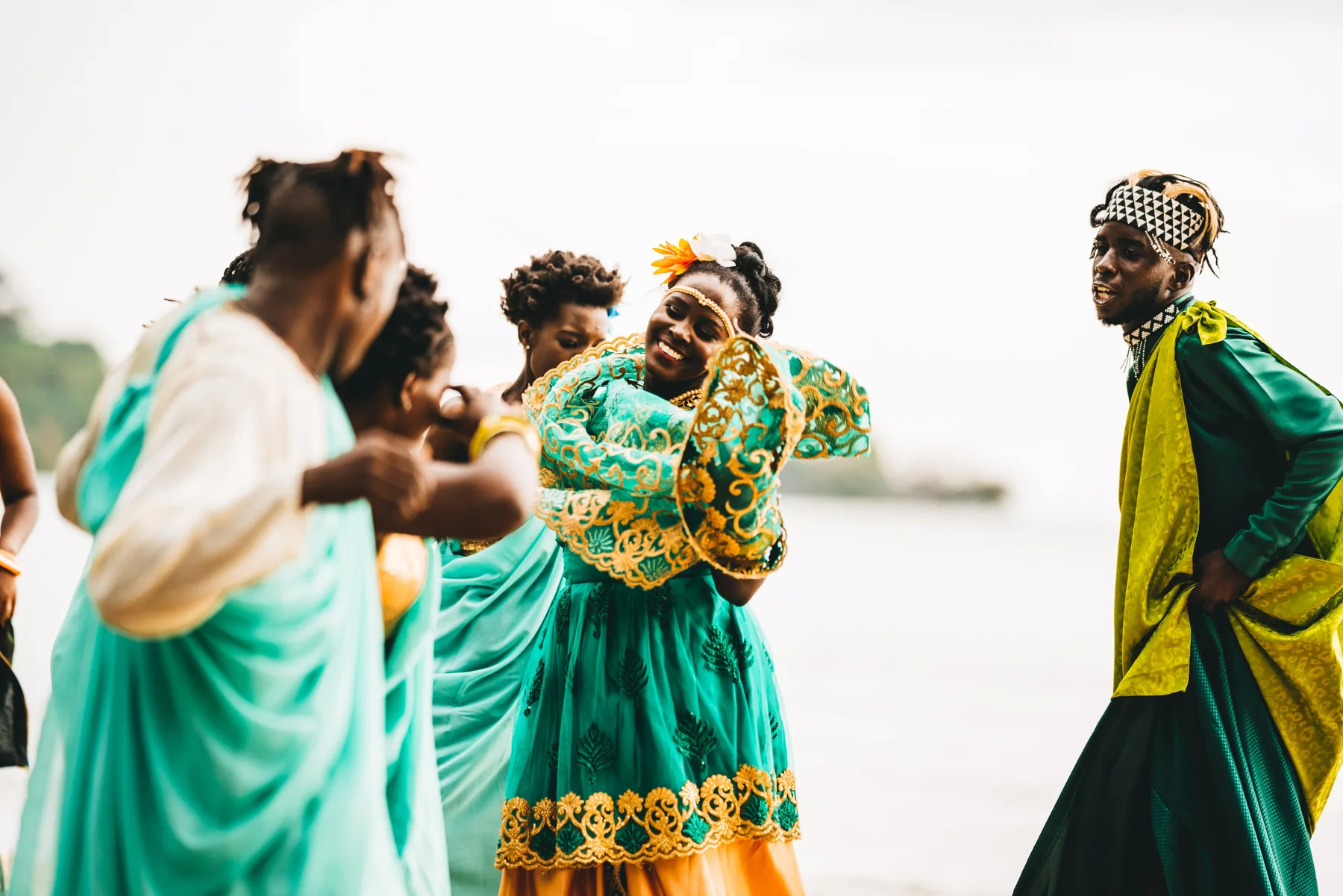
Documentary wedding photography generally emphasizes observing events as they happen. Editorial wedding photography often emphasizes deliberate composition and a more directed portrait treatment. Guided portraits describe how a photographer helps you during the photograph. These can appear together in one wedding gallery. Ask what each photographer means by the words and how that approach would work during your day.
Make three decisions separately: how you want to be photographed, what you want in the frame, and how you want the finished images to look. A candid moment can have bold color. A carefully arranged portrait can feel relaxed.
What the words tell you
Compare approaches without turning them into rules.
Photographers use these terms differently. Treat them as conversation starters, then ask for relevant examples and an explanation of the process. None of the labels establishes the price, time needed, amount of retouching or number of photographs you will receive.
On a small screen, swipe the table sideways to read each question.
| Term | What it commonly emphasizes | What to clarify |
|---|---|---|
| Documentary / photojournalistic | Events, relationships and reactions photographed as they unfold. | “When do you step in, and how do you handle the portraits we request?” |
| Editorial | Intentional framing, setting, clothing and posing; often used for a polished portrait look. | “What would you direct or arrange, and what would we need to plan?” |
| Traditional / formal portraits | Arranged groups or couple portraits, often with people looking toward the camera. | “Which combinations should we plan, and how will everyone know where to be?” |
| Guided / prompted portraits | Help with where to stand, what to do or how to move and interact. | “What does your guidance sound like, and can we tell you when something feels uncomfortable?” |
“Fine art,” “cinematic” and “timeless” need the same follow-up. Point to the actual photographs you like and ask what the description means in that photographer’s work. A label alone cannot tell you whether you will enjoy the experience.
There is also a difference between photographing an event as it happens and asking someone to repeat it for the camera. If that distinction matters to you, discuss it directly. You can request arranged family photographs while also asking that spontaneous interactions be allowed to unfold.
Three separate choices
Choose the experience as well as the look.
1. How much direction feels helpful?
Think about the experience you want during couple portraits. You might welcome clear instructions, prefer a little movement, or want quiet time with minimal interruption. Partners can have different preferences. Tell the photographer both, including anything you want to avoid.
Being nervous does not automatically make one style right for you. Ask the photographer to describe a typical portrait prompt and how they adapt when it does not feel natural. If you need seated arrangements, less walking or breaks, share those practical needs.
2. What belongs in the photograph?
Separate expression from framing. Do you like close portraits with little background, wider photographs that include the setting, or groups where everyone is easy to identify? An image may appeal because of the people’s connection, even if you would not want its dramatic pose or distant viewpoint.
Choose a small set of priorities. Wanting one composed portrait for your home does not mean every photograph needs the same treatment. Likewise, valuing candid interactions does not tell the photographer which family group you want photographed together.
3. Which finishing choices do you like?
Look at color, contrast, brightness, grain and black-and-white treatment separately from posing. Words such as “warm,” “light and airy” or “moody” describe an appearance more than how the moment happened. Ask whether the examples you like represent the finished work you would receive.
If two reference images have very different color treatments, explain what you like in each. Do not assume a photographer will switch editing styles across a gallery or reproduce someone else’s work. Confirm whether your preferences fit their established approach before booking.
Make an example useful
Describe what you like, then ask what it requires.
For each reference, write three short notes: keep, change, ask. Keep is the quality you like. Change is anything you would want handled differently. Ask is the practical question you cannot answer from the image.
A fictional reference conversation
Keep: “We like the closeness and the relaxed expressions in this walking portrait.”
Change: “We would prefer a shorter route and do not want a dip or lift.”
Ask: “Could we get that feeling in an accessible space at our venue, and what would you ask us to do?”
This illustrates a planning conversation. It is not a description of a Muyinza client session or a promised photograph.
A useful reference does not need to match your venue. But its light, space, access or preparation may differ from what your day allows. If you love a photograph on an empty staircase, ask whether your actual space will be available and what alternative would work. Confirm location permission and practical access before relying on the setting.
Once you have described your preferences, use the complete wedding gallery review guide to evaluate relevant work. That is a separate task: your style brief explains what you want; reviewing a gallery helps you assess whether the photographer’s delivered work fits it.
Different moments, different needs
Plan the approach by part of the day.
- Getting ready: identify the people and interactions that matter. Discuss whether you want any arranged details or portraits and where those fit without interrupting something important.
- Ceremony: share the ceremony plan and venue restrictions. Tell the photographer which relationships or reactions matter; accept that spontaneous expressions cannot be scheduled.
- Family photographs: name the requested combinations. The family-photo list guide helps turn “a few family photos” into an understandable plan.
- Couple portraits: discuss the amount of guidance, setting and time you want to spend away from guests. If a particular portrait matters, ask what producing it would involve.
- Reception: explain whether speeches, table conversations or the dance floor matter most. Ask about examples from comparable spaces rather than assuming a style label explains the evening coverage.
For a Boston or Greater Boston wedding with separate ceremony and reception locations, include the actual travel plan in this discussion. A portrait reference is not a reason to assume another location will fit. The same applies to weddings in Portland, Maine or New Hampshire; Muyinza is based in Boston, and travel arrangements are confirmed for the booking.
If portraits and guest time compete, decide which matters more before finalizing the schedule. Use the eight-hour timeline examples to discuss the tradeoff. A style name does not create extra time, and a second photographer does not let the couple be in two places at once.
Your preferences in plain language
A short style brief for your photographer.
Complete these prompts together. Leave anything undecided as a question; you do not need to learn photography terminology to inquire.
- What we want to remember: the people, relationships and moments that matter most.
- During portraits: the amount and kind of guidance each of us would welcome.
- In the frame: close expressions, wider surroundings, formal groups or other priorities.
- In the finished images: specific color or black-and-white examples we like, with a reason for each.
- Keep / change / ask: a few reference notes, plus poses or arrangements we would prefer to avoid.
- To confirm: what fits the photographer’s work, our schedule, the venue and our comfort needs.
A blank file to edit in a notes app. No signup required.
Keep this beside your coverage questions. Style preferences do not replace the written agreement on hours, staffing, delivery or use of the images. The package comparison guide covers those booking details.
Wedding photography with Muyinza
Tell me what you want to remember.
My approach is story-driven and observant, with calm direction when portraits or family groups need structure. Share your date, venue, the photographs that matter most and how much guidance you would like. You can ask about the fit before you have a finished style brief.
The published wedding collection is $2,999: eight hours, two photographers, a 48-hour sneak peek, a high-resolution online gallery, download rights and a complimentary engagement session. Travel, engagement arrangements and full-gallery timing are confirmed during booking.
I’m Muyinza, a Black photographer based in Boston, photographing weddings, portraits and events across Greater Boston and New England.
Discuss your wedding photographyAbout this guide
The three-decision method, keep/change/ask exercise and style brief are original planning tools by Muyinza Photography. Style terms are working descriptions, not standardized service promises. The linked wedding collection governs Muyinza’s published service details.
Public usage varies: J Goldie Photography describes documentary coverage with movement-based editorial posing, while Rebecca Cee describes an editorial approach without posing. These photographers’ own descriptions, reviewed September 14, 2026, illustrate why asking about the actual process matters.